
Cumberland County Arrest History
Cumberland County arrest records begin with the agency that made the arrest or filed the complaint. Possible custodians include the Cumberland County Sheriff's Office, Vineland Police, Bridgeton Police, Millville Police, and New Jersey State Police. That agency creates the incident or arrest narrative. When a person enters county custody, the separate Cumberland County Department of Corrections verifies the commitment, assigns or confirms a county number, records intake, and captures or receives the booking photo and Live Scan fingerprints.
The booking entry documents custody processing, not a conviction. It can state the initial charge and release conditions, but prosecutors can decline or change charges. A grand jury can return no bill, and a court can dismiss or acquit. The final outcome belongs in the municipal or Superior Court file. For that reason, Cumberland County arrest history should be read as a linked trail across the arresting agency, county jail, court, and state repository.
Cumberland DOC Booking Records
Cumberland County Corrections at 54 West Broad Street in Bridgeton holds the booking and custody file. Its records can include admission and release papers, fingerprints, county number, commitment, initial charge, bail funds, sentence credits, and pre-release warrant-check data. The Sheriff's Office at 220 North Laurel Street is a different department. Sending a booking request to the sheriff can slow the route because Cumberland Corrections operates the jail.
The official county lookup is the first check for current custody. If its embedded or vendor connection fails, call the county main line at 856-453-2125 or use the Cumberland OPRA channel for an identifiable booking record. Give the full legal name, date range, arresting agency, event location, and incident or complaint number when known.
Cumberland County Corrections
54 W. Broad St.
Bridgeton, NJ 08302
856-453-2125
Cumberland County Sheriff
220 N. Laurel St.
Bridgeton, NJ 08302
856-451-4449
Looking Up Cumberland County Arrests
Use a channel-complete search because Cumberland County does not publish a comprehensive daily arrest blotter. Start with current custody, then trace the police report and court complaint. A fingerprint-based NJSP Personal Record Request is the authoritative way to review one's own statewide New Jersey history. NJSP's 212B name check is consent-based and limited to qualified purposes, so it is not an unrestricted public people search or the route for one's own self-check.
- Check the Cumberland County incarcerated-person lookup for current custody or a recent booking. If it fails, call Corrections at 856-453-2125.
- Request the arrest or incident report from the arresting sheriff, municipal police department, or NJSP records channel. Ask for an existing, identifiable record.
- Search the municipal complaint or Cumberland Superior Court docket to connect the initial arrest to filed charges and the later disposition.
- For one's own statewide arrest history, follow NJSP Personal Record Request instructions and complete fingerprint enrollment through IDEMIA IdentoGO.
- Use county or city OPRA when an agency-held public portion is not self-service. For custody alerts, enroll in NJ VINE at 877-846-3465.
NJDOC Offender Search is a later fallback for a person transferred after a state sentence. It does not search Cumberland County's pretrial population. Parole status questions can also require the New Jersey State Parole Board public-information or OPRA channel.
Cumberland Arrest Lookup Without Blotter
No official county daily booking blotter was located in the reviewed Cumberland sources. The county incarcerated-person lookup is the closest official current-custody and recent-booking route. A blank result does not prove there was no arrest. The person may have been released, transferred, held elsewhere, entered under a name variant, or not yet indexed. Selective agency press releases also do not form a complete arrest index.
For a missing result, identify the arresting agency first. Request its incident report, call Cumberland Corrections, and then search the court that would hear the charge. Municipal Court Case Search covers local complaints. PROMIS/Gavel covers indictable Superior Court criminal matters. The final Cumberland County criminal court case supplies the disposition that a booking result cannot.
Inside a Cumberland County Arrest Record
A Cumberland County arrest file may combine an agency incident entry with jail intake fields. It can identify the event, agency, officer, alleged offense, complaint or warrant, and property or evidence references. The booking side can add an intake time, county number, fingerprints, photograph, initial bail or release state, and custody status. Some fields remain internal or require a focused records request.
Public access has limits. Active-investigation details, victim data, juvenile material, medical and security information, protected addresses, and personal identifiers can be withheld or redacted. Ask for the segregable public portion instead of assuming the full Cumberland arrest file is open.
| Incident number | The arresting agency's identifier for its report. |
|---|---|
| Arrest details | Date, time, place, agency, officer, and alleged offense when public. |
| Complaint or warrant | Links the enforcement event to the legal authority or court complaint. |
| County number | Cumberland Corrections identifier used for jail record and account routing. |
| Booking data | Intake time, fingerprints, photograph, initial charge, and custody processing. |
| Release status | Time-sensitive bail, recognizance, transfer, or release information. |
Cumberland Arrest Records Reach NJSP
At custodial booking, Live Scan fingerprints help establish or match the person's State Bureau of Identification number. Cumberland Corrections also captures a digital booking image and creates the county custody record. NJSP reports that the New Jersey Computerized Criminal History is then built or updated, while fingerprints travel to the FBI Next Generation Identification system. The transaction control number links that arrest cycle to later prosecutorial and court reporting.
Courts and prosecutors report dispositions back through automated systems. A lag or identity mismatch can leave the NJSP chronology without the final result even after Cumberland County's court has resolved the charge. A person reviewing their own file should compare the fingerprint-based NJSP record with the actual judgment and the arresting agency report. That three-source check separates the initial allegation from the reported disposition.
Booking Logs and Recent Arrests
Cumberland County's current-custody lookup is useful for a recent booking, but it is not a historical arrest ledger. Entries can change after release or transfer. Charge data can also change after prosecutor screening. Vineland, Bridgeton, and Millville police each own their incident or arrest reports, while the county jail owns its intake. A city OPRA request therefore cannot substitute for Cumberland Corrections records, and a county jail request cannot supply the full police narrative.
State custody is separate. The NJDOC offender information source explains the state search channel.
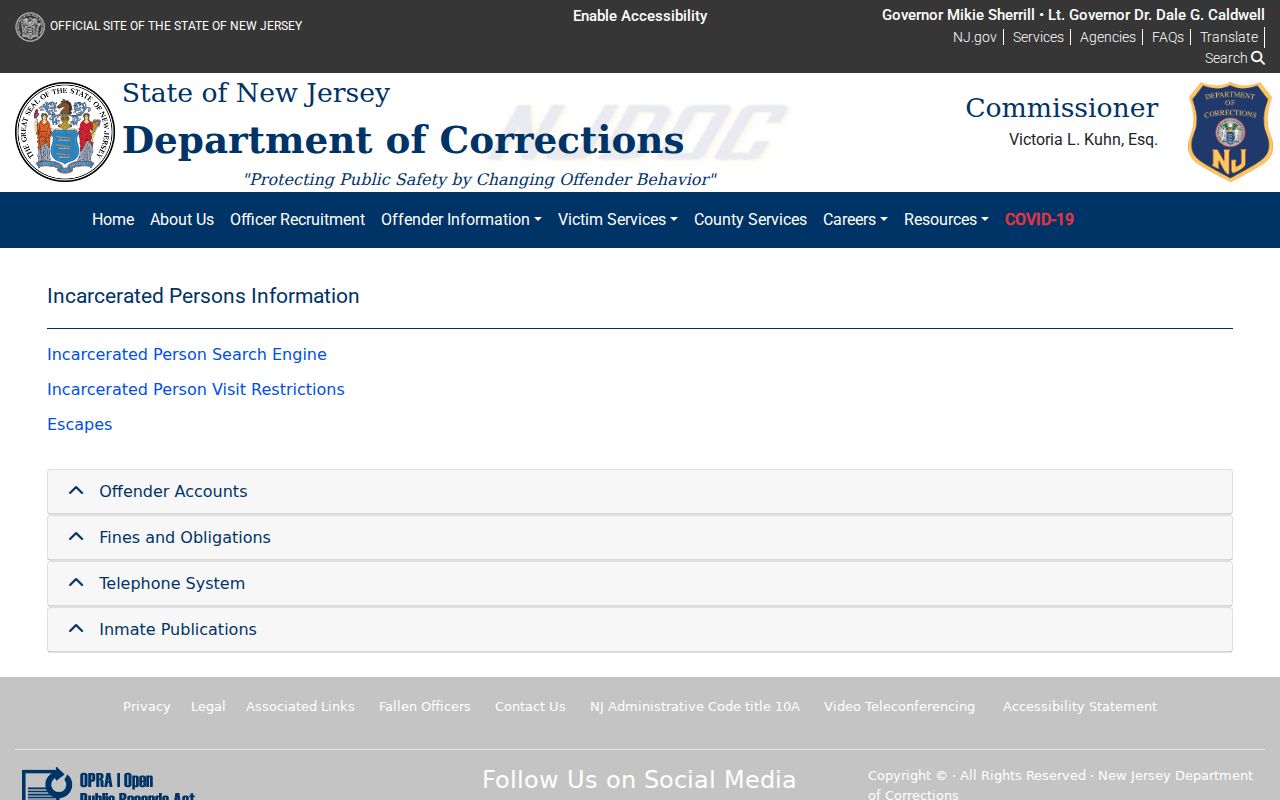
This state screen belongs later in the lookup chain, after a state sentence or transfer, not as a substitute for a recent Cumberland County booking search.
Note: A roster absence can reflect release, transfer, delay, or spelling variation and does not prove that no arrest occurred.
Cumberland Jail Release Warrant Check
Cumberland County's jail record extends past intake. The county's corrections clerk description confirms work on commitments, admissions and releases, sentence credits, fingerprints, bail funds, and pre-release warrant checks. That last check matters because satisfying bail in one case does not guarantee release if another valid hold exists. No current official county-wide public warrant database was found, so a stale list or a blank web search cannot confirm clearance.
The official jail records staffing source identifies the records duties behind that process.
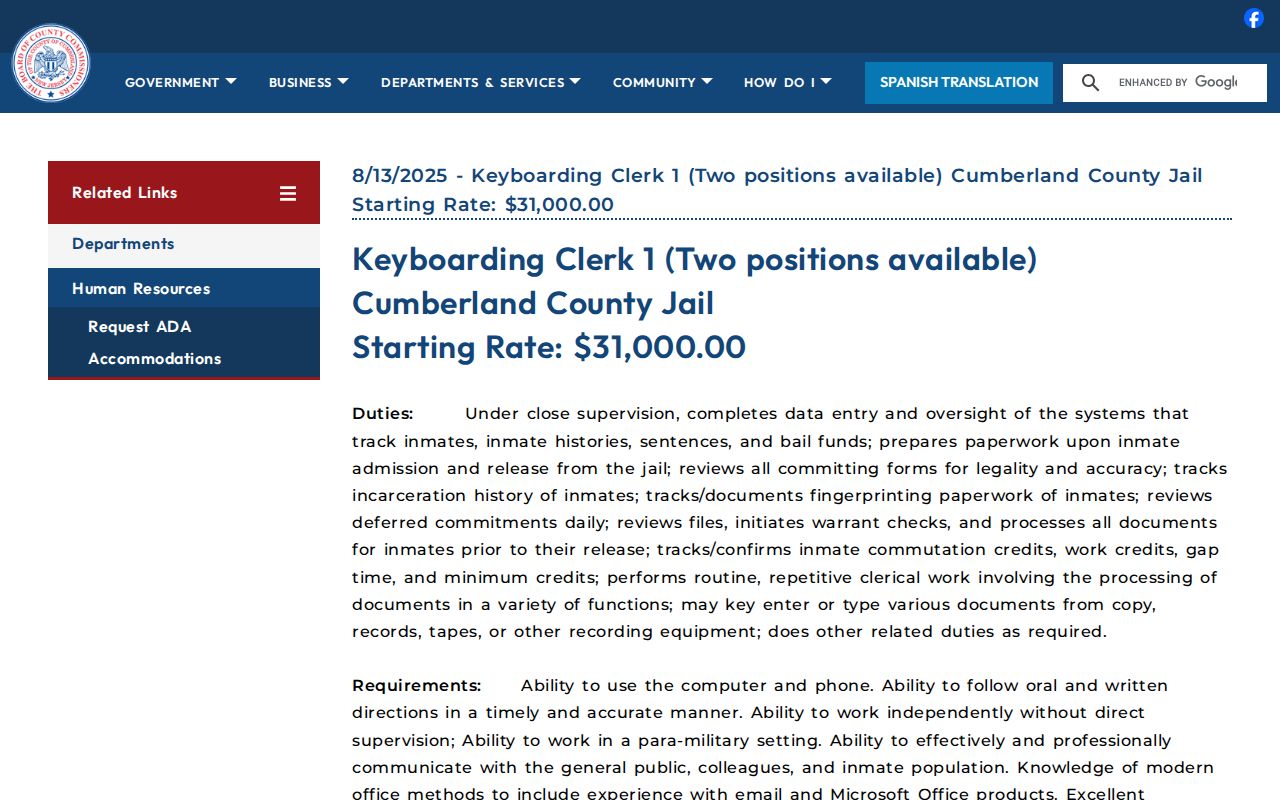
This source explains why the Cumberland booking file contains operational release and warrant-check data that may not appear in a public roster.
Cumberland Arrest Bail Process
Cumberland Corrections handles accepted bail at the Broad Street entrance. The person posting bail must be at least 18 and show photo identification. The jail accepts exact cash, a postal money order, or a bank-certified check. It does not accept a personal check or card for bail. Admissions verifies identity, runs warrant checks, prepares recognizance paperwork, collects funds, issues a receipt, and forwards the name for release.
The Cumberland jail bail source shows the official civilian and bondsman procedure.
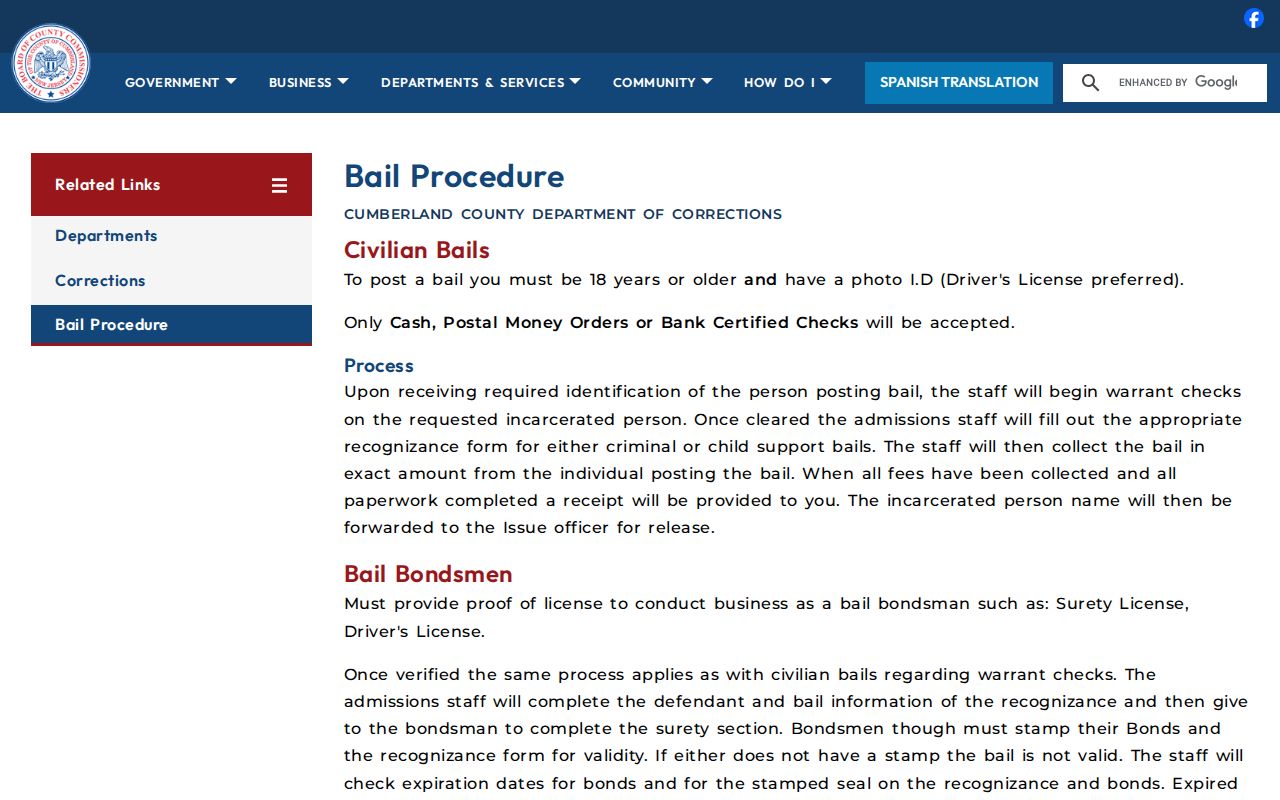
The procedure demonstrates that bail processing is a custody event. The court still controls the legal release state and the Cumberland criminal docket holds the lasting case result.
Arrests Are Not Convictions
A Cumberland County arrest record proves that an enforcement or custody event was recorded. It does not prove guilt. The prosecutor may decline an initial charge, amend it, send it to municipal court, or present it to a grand jury. A case may end in dismissal, no bill, acquittal, diversion, or conviction. Only the court disposition answers what happened to each count.
A dismissal also does not make every arrest entry instantly invisible. Eligible New Jersey records may require expungement or an automatic statutory process, and agencies need time to isolate covered data. Compare records before drawing a conclusion.
| Point | Arrest Record | Conviction Record |
|---|---|---|
| Creator | Arresting agency and Cumberland Corrections | Municipal or Superior Court |
| Shows | Enforcement, allegation, and booking | A finding of guilt and judgment |
| Location | Police report and county custody file | Court docket and reported SBI disposition |
| Possible end | Release, transfer, or later charge change | Sentence, appeal, or qualifying expungement |
Note: An arrest is not proof of guilt, and the final Cumberland County court disposition must be checked before relying on it.