
Cumberland County Criminal Court Cases
The Superior Court of New Jersey, Law Division, Criminal Part hears Cumberland County indictable crimes from first through fourth degree. It handles detention decisions, indictments, trials, pleas, sentences, and post-judgment work. Municipal courts handle most traffic, ordinance, disorderly-persons, and petty-disorderly-persons charges. New Jersey uses those terms instead of calling every lower offense a misdemeanor. A case can also move between levels when the Cumberland County Prosecutor's Office declines an indictable path or remands a suitable charge to municipal court.
Each court is custodian of its own Cumberland County criminal case file. The county Criminal Records Room manages public inspection and copies for open Superior Court criminal matters. A municipal court retains its own complaint and disposition record. That split is why a search limited to one system can miss a valid file. The Cumberland Vicinage page confirms court contacts and services.
Cumberland Court Files at Broad Street
Cumberland County's main criminal records point is the courthouse at 60 West Broad Street in Bridgeton. The Judiciary main number is 856-878-5050, while the role-specific Criminal Records Room number is 856-453-4300. Open criminal files normally remain with the Cumberland Criminal Division. Closed files can transfer to the Superior Court Clerk's Office in Trenton, so staff may route an older copy request outside Cumberland County even when the case began here.
The official courthouse source shows the Vicinage 15 location and contact channel.
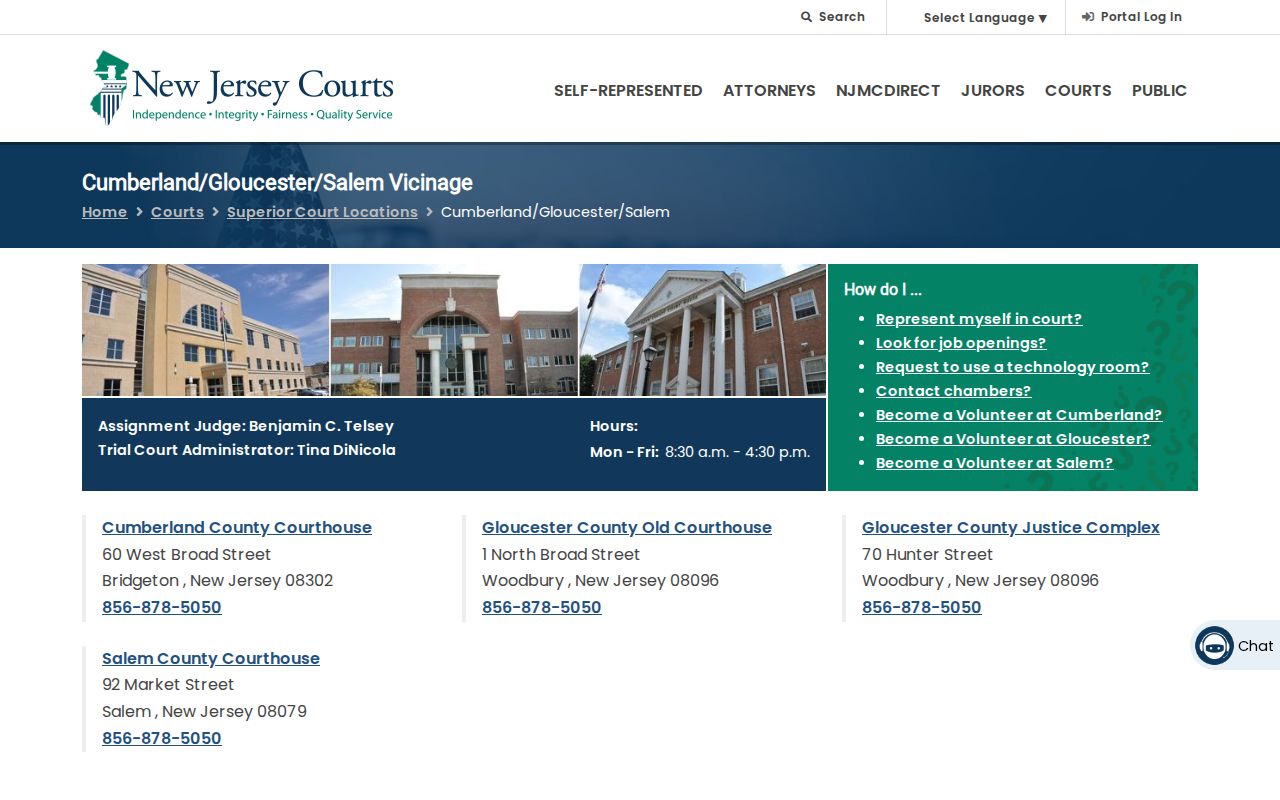
This courthouse view grounds the search in the office that holds the Cumberland criminal docket, not in an unrelated police or jail database.
Cumberland Criminal Records Room
60 W. Broad St.
Bridgeton, NJ 08302
856-453-4300
Superior Court Main Line
Vicinage 15
Cumberland County Courthouse
856-878-5050
Searching Cumberland County Case Records
Start with the court level, not just a name. PROMIS/Gavel covers indictable Superior Court criminal matters and tracks a case from arrest through appellate review. Limited Criminal Conviction Information is available online, while a public courthouse terminal gives inquiry-only PROMIS/Gavel access. Municipal Court Case Search covers local complaints, traffic, ordinance matters, and lower offenses. It is free, though terms and a captcha may gate a query.
- Decide whether the Cumberland charge is indictable or municipal. Use the complaint, summons, or court notice when available.
- For Superior Court, search by legal name, docket number, or judgment number and narrow the county to Cumberland.
- For municipal court, use the court ID plus prefix, year, and complaint or ticket number. A name and date of birth may support an alternate path.
- Read each count's status, disposition, event history, and sentence. A charge label alone does not state the outcome.
- Ask the Cumberland Criminal Division or the named municipal court for the judgment, order, or certified copy when the public result lacks the document.
| Field | Type | Use | Cumberland Search Note |
|---|---|---|---|
| Party name | Text | One search key | Try the legal name and known variants |
| Docket number | Text | Alternative | Best key for a known Superior Court case |
| Judgment number | Text | Subscriber access | Available through the EAP search path |
| County | Filter | Optional | Select Cumberland to reduce same-name matches |
| Court ID | Text | Municipal path | Bridgeton 0601, Millville 0610, Vineland 0614 |
A strong Cumberland case identifier saves time at the records desk. If only a name is known, add a date of birth rather than guessing at a same-name match.
Cumberland Court Search Gaps
No single Cumberland County case search exposes every charge and document. Criminal Conviction Information is narrower than full courthouse PROMIS/Gavel access, so a pending or dismissed count may not appear in a conviction-only result. The eCourts criminal jacket can hold e-filed complaints, briefs, motions, signed orders, and notices, yet it may omit discovery, older paper items, filings by non-eCourts users, and some complaints or presentence materials.
The Municipal Court Case Search is also the wrong tool for an indictment. Its source screen illustrates the municipal route.
If a Cumberland docket has no downloadable judgment, identify the exact docket and request that item from the court instead of treating the missing image as a missing case.
Inside a Cumberland County Case File
A Cumberland County criminal court file ties each charge to the events and result that followed. The header identifies the court, docket or complaint number, filing date, case type, and current status. Party and counsel entries show who appeared. The charging document states the alleged offense and New Jersey statute. Docket events may then record first appearance, indictment or accusation, arraignment, motions, conferences, plea, trial, judgment, sentence, and appeal.
The most useful reading habit is to match the charge, disposition, and sentence on the same count. Public summaries may omit documents or detailed financial balances. A certified judgment from the Cumberland court is stronger evidence of the final result than a brief portal line.
| Docket and court | Identifies the Cumberland venue, case sequence, and case status. |
|---|---|
| Charging document | Shows the complaint, accusation, or indictment and cited offense. |
| Docket events | Lists public hearings, motions, orders, plea, trial, and appeal activity. |
| Disposition | States the result for each count, such as guilty, dismissed, acquitted, or amended. |
| Judgment | Records the offenses of conviction and the court's formal decision. |
| Sentence | May show custody, probation, fines, restitution, credits, and concurrent or consecutive terms. |
Cumberland Case Copy Fees
Use the New Jersey Judiciary Records Request Form for an actual Cumberland County document. It asks for delivery method, processing location, case name, docket or complaint number, and the requested copy type. If the number is unknown, the form accepts details such as aliases, date of birth, sentencing judge or date, and indictment or arrest date. JEDS is the preferred submission path for an open Superior Court criminal file.
The Judiciary fee source provides the official fee and waiver context.
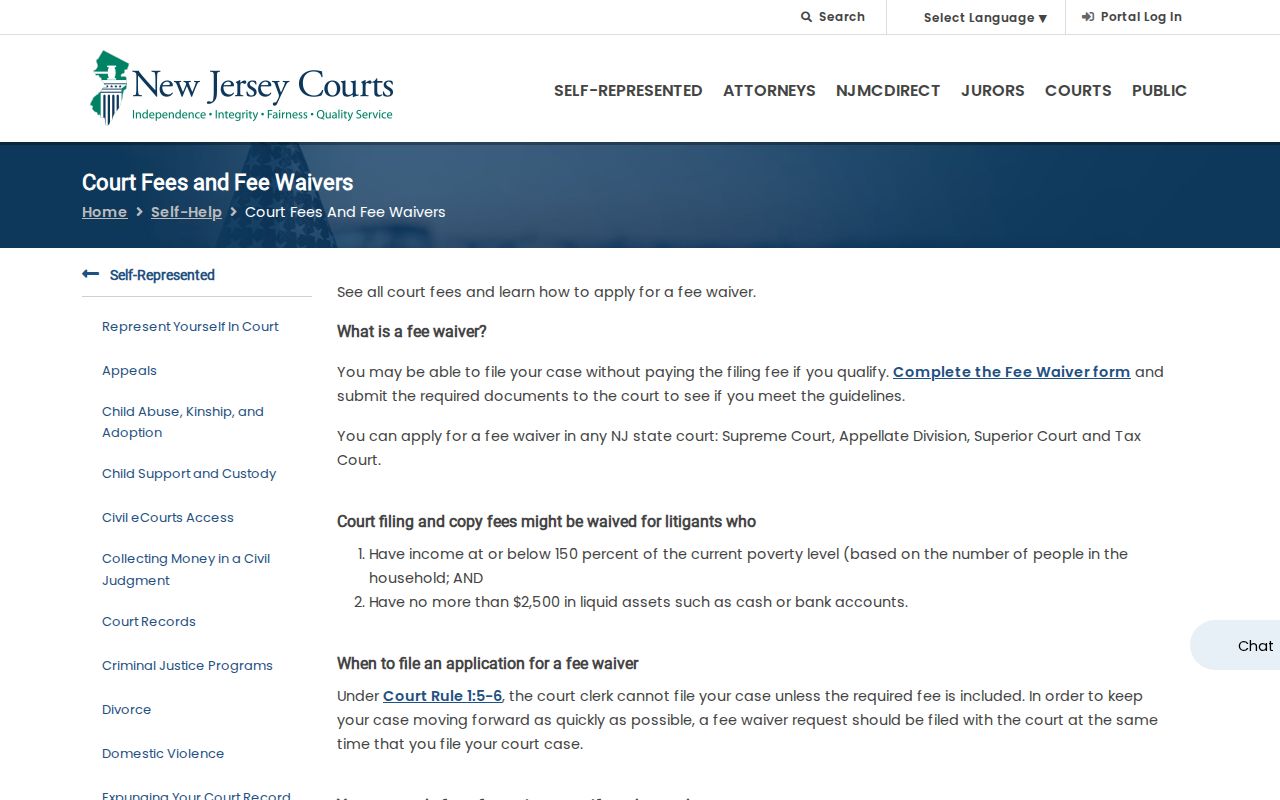
The image supports a key distinction: a free search result is not the same product as a plain, sealed, certified, or exemplified Cumberland court copy.
| Copy Product | Posted Amount |
|---|---|
| Letter-size plain copy | $0.05 per page |
| Legal-size plain copy | $0.07 per page |
| Certified copy | $15 |
| Seal | $10 |
| Exemplified copy plus plain copies | $50 |
| Triple exemplified copy | $60 |
Note: Verify the amount and accepted payment method with the Cumberland court before ordering because court schedules can change.
How a Criminal Case Moves
A Cumberland criminal complaint starts the court trail, but the next step depends on its level. After a county-jail entry, New Jersey's reform process generally calls for a first appearance within 48 hours. A judge addresses counsel, release conditions, and any detention motion. The prosecutor may decline the case, send it to municipal court, or present an indictable matter to a grand jury. A no bill ends that grand-jury presentation; a true bill creates an indictment.
After indictment, the Cumberland County case can proceed through arraignment, conferences, motions, plea talks, trial, judgment, and sentence. Appeals move to the Appellate Division. Not every case visits every stage, and no researched Cumberland source supplies a fixed completion time.
Case flow: Charges Filed › Arraignment › Pretrial › Plea or Trial › Disposition › Sentencing
Reading Cumberland Case Outcomes
New Jersey indictable crimes use degrees. First degree is the most serious, followed by second, third, and fourth degree. That degree describes the offense level, not the outcome. Read it beside the disposition. “Dismissed” means the count ended without conviction. “Amended” means the final charge differs. “Not guilty” or “acquitted” follows adjudication. A PTI or conditional-dismissal entry points to diversion and its completion terms.
Sentence terms also need context. Jail credit affects time calculations. Concurrent terms run together, while consecutive terms follow one another. Probation is court-ordered community supervision. A mandatory minimum limits release eligibility under the governing law. The Cumberland criminal court case itself remains the right place to confirm these linked fields rather than inferring a result from an arrest label.
- Disposition
- The outcome entered for one charge.
- Accusation
- A formal charging document used when an indictable case proceeds without a grand-jury indictment, usually with waiver.
- Nolle prosequi
- The prosecutor's formal decision not to proceed on a charge.
- Judgment of conviction
- The formal court record of conviction offenses, plea or verdict, and sentence.
Cumberland Dispositions Reach SBI
The Cumberland court file and the New Jersey State Police repository answer different questions. Court staff maintain pleadings, hearings, orders, and the judgment. Courts and prosecutors report dispositions through automated systems to the State Bureau of Identification's Computerized Criminal History and Court Disposition Reporting systems. The transaction control number helps connect an arrest cycle to later prosecutorial and court events.
A reporting lag or unmatched identifier can leave the repository entry incomplete even after the Cumberland County case has ended. Anyone reviewing their own record should compare the NJSP fingerprint-based Personal Record Request with the actual Cumberland judgment. If they conflict, retain the court document and use the official correction channels. An arrest entry alone never supplies the case outcome.
Case Record Access & Restrictions
New Jersey Court Rule 1:38 presumes public access to court records but lists excluded material and redaction duties. A Cumberland County public view can suppress Social Security numbers, full birth dates, protected addresses, victim and minor details, presentence reports, and other confidential data. Juvenile, sealed, and expunged material is not part of ordinary public display. Grand-jury deliberations remain secret even when a resulting indictment is public.
OPRA governs county and municipal executive records, but it does not replace Judiciary procedures for a Cumberland court file. Ask the court custodian for a segregable public copy when a document includes protected fields. When a case does not appear online, check the court level, spelling, case identifier, and whether the file is closed or archived. Then contact the Cumberland Criminal Division or the named municipal court.